
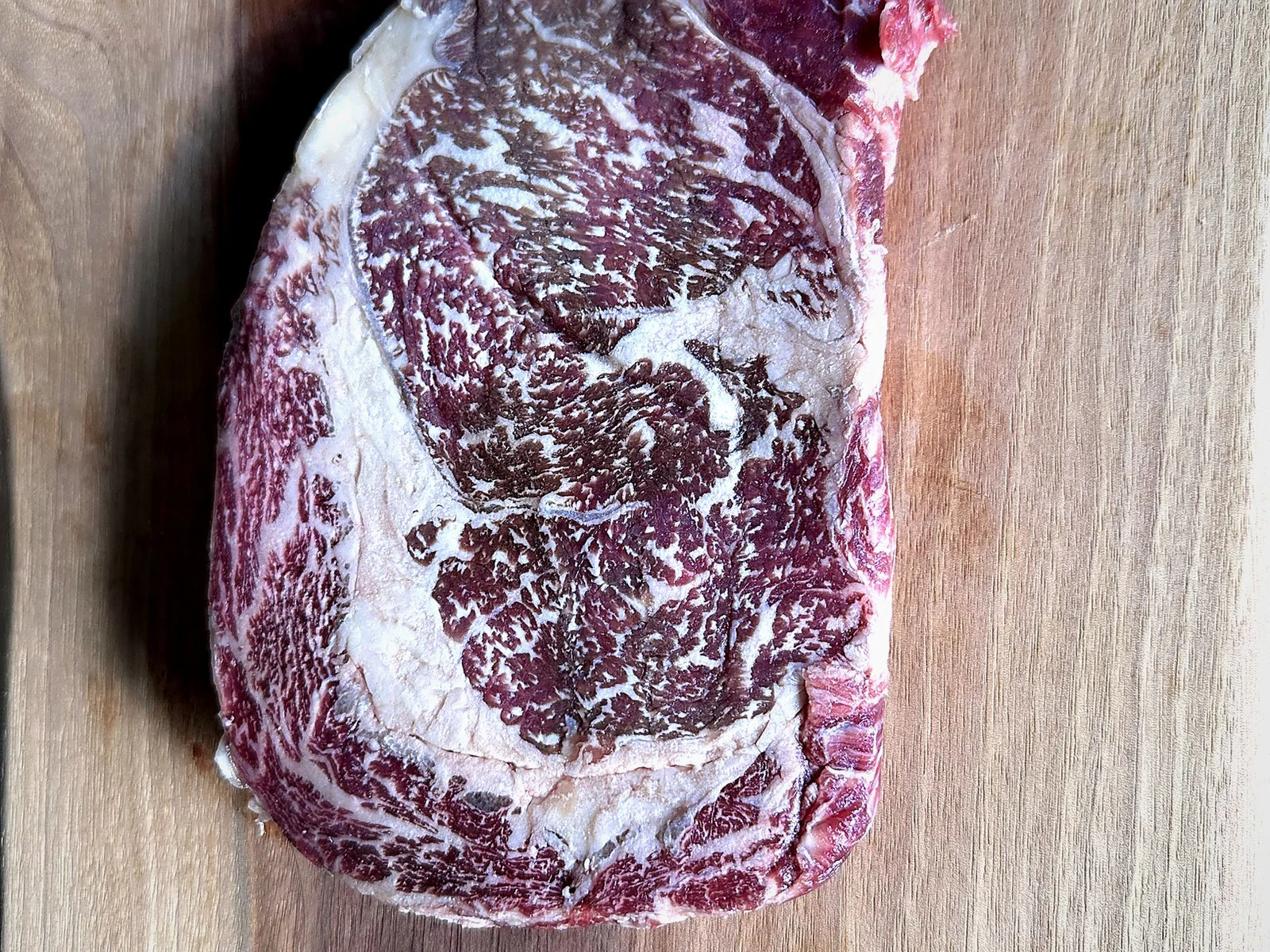
Wagyu Rib Eye Steak
The cut people remember.
About this cut
Bone-out rib eye with a generous cap and marbling that runs edge to edge. Thirty-two to thirty-six months on feed is what puts that fat inside the muscle instead of around it. If you are cooking for someone you want to impress, this is the steak.
How it works
- Frozen and vacuum-sealed for freshness.
- Farm pickup by appointment only in Norwich, or local delivery in Norwich and area.
Cooking tips
- 1Pat dry and season with salt. Preheat a heavy pan or grill over medium-high heat.
- 2Sear both sides, then reduce the heat to finish. Render the fat edge carefully; move away from grill flare-ups.
- 3Check the thickest part with a thermometer. Rest for 5–10 minutes before slicing across the grain.
Health Canada recommends at least 63°C / 145°F for beef steaks and roasts (medium-rare), 71°C / 160°F for medium, or 77°C / 170°F for well-done. Mechanically tenderized beef needs at least 63°C; turn steaks at least twice. Follow any higher temperature on the package.
Portion guidance
Plan on 150–200 g of raw boneless Wagyu per adult with sides.
Slice this rich cut for sharing rather than serving a large steak to each person.
Serving estimates are a guide, not a guaranteed pack weight or yield. Allow for appetites, sides and cooking loss.
Storage instructions
- Keep frozen at −18°C / 0°F or colder. Follow the package’s storage directions and dates.
- Thaw on a tray in the refrigerator at 4°C / 40°F or colder, never on the counter. Larger roasts may need several days. Keep raw juices away from other food.
- Once thawed in the fridge, cook within 2–4 days. For best freezer quality, use steaks and roasts within 10–12 months; continuously frozen beef remains safe longer, but quality declines.
- Refrigerate leftovers within 2 hours in shallow containers, use within 2–3 days, and reheat to 74°C / 165°F.
Food safety guidance: Health Canada cooking temperatures · Storage · Leftovers